


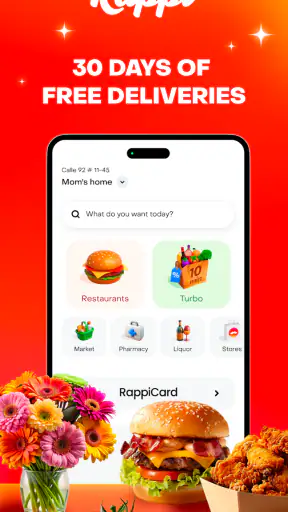
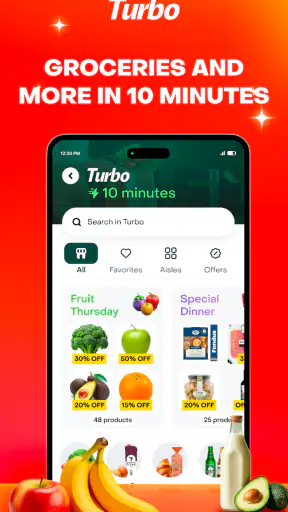
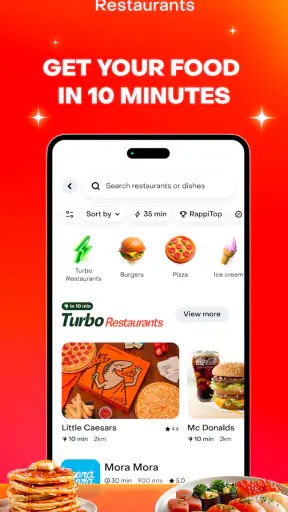
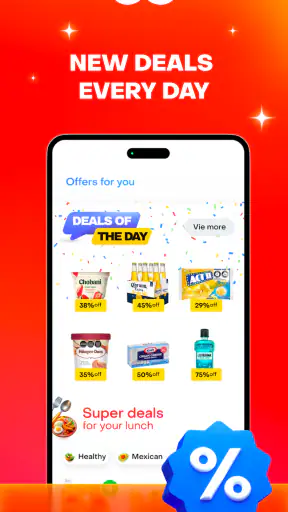
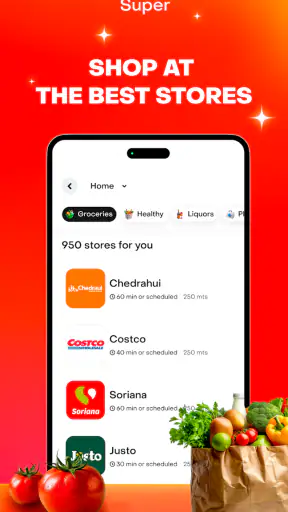
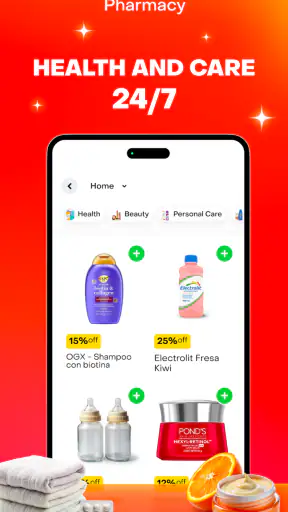
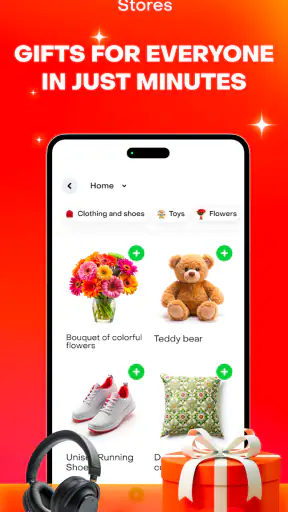
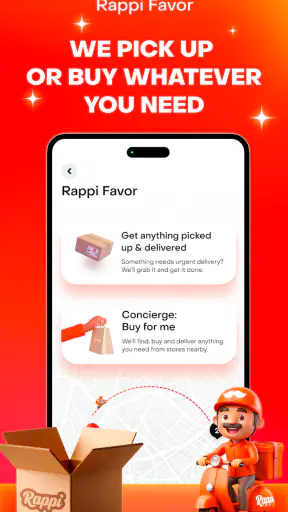
I use delivery apps when convenience matters more than making another trip, but I do not judge them only by how attractive the home screen looks. The real test is whether one app can handle an ordinary meal, a forgotten grocery item, or an urgent pharmacy run without making the process feel more complicated than going out myself. That is the space where Rappi: Food Delivery, Grocery tries to be useful: it is a free Food & Drink app from Rappi, Inc - Delivery that brings several everyday errands into one place.
My experience with it is best described as practical rather than flawless. The broad selection is its strongest argument, especially when I want food and household essentials in the same general workflow. At the same time, a broad marketplace can make the final decision less straightforward. Delivery availability, the exact items shown, preparation time, and the quality of the individual business all affect the result. I would recommend it to someone who values having many types of orders under one roof, but I would not tell every reader to abandon a trusted restaurant, supermarket, or pharmacy app immediately.
How I Decide Whether Rappi Is Worth Keeping
Before choosing a delivery service, I look at four things: local coverage, the usefulness of the catalog, clarity at checkout, and how well the app handles an order that is not perfectly simple. A restaurant-only service may be better when I already know exactly where I want to eat. A supermarket app can be more suitable for a planned weekly shop. A pharmacy-focused service may feel more reassuring for a health-related purchase. Rappi becomes more interesting when I want flexibility rather than a single-purpose tool.
The app has been available since July 15, 2015, and its reach is reflected in more than 100 million installs. Those figures do not guarantee that every neighborhood has the same selection, but they do tell me this is an established service rather than a small experiment. Its average rating is 3.5 from about 2.4 million ratings, which suggests a mixed but substantial user experience. I read that as a reason to keep expectations realistic: many people clearly use it successfully, while the service is not universally smooth.
I also pay attention to whether an app is suitable for the people using it. The content rating is Mature 17+, so it is not something I would casually set up as a child’s independent shopping tool. The app is free to install, but the order itself is a separate spending decision. I treat the displayed total, delivery details, and any applicable charges as part of the purchase rather than assuming that a free app means a low-cost order.
One app for several kinds of errands
The main appeal is the combination of food, groceries, pharmacy items, and other delivery needs. That matters on days when I do not want to switch between several accounts, search systems, and checkout processes. For example, imagine arriving home late and realizing that dinner ingredients are missing, a basic household item is running out, and nobody wants to make a separate trip. I can first look for a prepared meal, then check whether the same service can cover the smaller essentials. Even when I place separate orders, keeping the search in one app reduces the mental overhead.
This is also useful for less predictable situations. A planned grocery trip is usually easier when I have time to compare products in person, but a short-notice need is different. Rappi is more valuable when the question is “How can I solve this tonight?” rather than “Where can I get the absolute best selection for a month of shopping?” That distinction helped me understand its role. It is a convenience layer, not a complete replacement for every kind of retail visit.
What I check before pressing the order button
I do not treat the first result as automatically the best choice. I compare the estimated timing, the store or restaurant name, the item description, and the final basket before committing. A tempting menu item can become a poor deal if it arrives at the wrong time or if I have not noticed that the available option is smaller or different from what I expected. The same habit applies to groceries: I review quantities and variants carefully instead of adding the first matching product.
One useful workflow is to separate “must have” items from “nice to have” items. If the essential item is unavailable, I would rather know before building a large basket around it. For a meal, I check whether the order still makes sense if one side or drink disappears. For groceries, I avoid relying on vague product names when the exact size or type matters. This is not glamorous, but it is the kind of discipline that prevents a quick order from turning into a second errand.
I also keep the delivery context in mind. A hot meal, refrigerated item, and pharmacy product do not have the same practical requirements, even if they appear within one broad service. I plan around the most time-sensitive part of the order and avoid assuming that combining needs will always make the process faster. Sometimes the convenience of one app is worth more than perfect coordination; sometimes placing a simpler, focused order is the wiser choice.
Where Rappi Wins, and Where Another App May Fit Better
The strongest advantage is breadth, not perfection
Rappi wins when I want a single starting point for several local needs. Its identity as a food, grocery, pharmacy, and general delivery app makes it more versatile than a service built only around restaurant menus. I can use it for a spontaneous lunch, a small household refill, or an item I would rather not search for in person. That breadth is especially helpful for people who live in a busy area and prefer browsing nearby options instead of remembering which specialist app handles each category.
It is also a good fit for flexible shoppers. If I am willing to choose among available businesses rather than insisting on one specific store, the marketplace approach can save time. I can compare what is currently offered and make a decision based on convenience. This is different from a routine grocery plan, where I may care more about a familiar layout, a saved shopping list, or precise control over every product.
Another quiet strength is the way the same app can support different levels of urgency. I might use it for a casual meal when timing is not critical, then return later for a more immediate household need. That does not mean every order will arrive exactly as hoped, but the app’s range makes it easier to adapt when plans change. For me, that flexibility is more meaningful than simply having a large number of restaurants on a screen.
Why the broad marketplace can create friction
The same variety that makes Rappi useful can make it harder to compare like with like. A restaurant’s menu, a grocery catalog, and a pharmacy listing follow different expectations. I need to pay attention to descriptions, quantities, substitutions, and timing in a way I might not need with a focused store app. New users may initially assume that every listing offers the same level of detail or consistency, but the experience can vary by the business behind the listing.
My biggest caution is to avoid using the app on autopilot. I would not place a large, complicated order minutes before an important appointment. I would also avoid treating it as the ideal tool for a carefully planned bulk shop unless the available local catalog genuinely suits that purpose. When accuracy matters more than speed, visiting a known store or using its dedicated ordering system may be less frustrating.
The rating of 3.5 is worth considering alongside the app’s popularity. A large user base means the service is relevant, but it also means experiences can differ widely by location and order type. I see the rating as a prompt to test Rappi with a modest order first. That gives me a chance to understand the local selection, delivery flow, and how clearly the app presents the total without risking a large purchase.
Comparing it with the usual alternatives
Compared with a restaurant-only delivery app, Rappi is more useful when my need changes from one order to another. The specialist may feel cleaner for browsing menus, repeating a favorite meal, or concentrating on restaurant reviews. I would choose the specialist when I already know the restaurant and want the simplest possible path. I would choose Rappi when I want to explore several kinds of delivery in one place.
Compared with a supermarket’s own app, Rappi is better suited to a quick top-up or an unplanned need than a full household routine. A dedicated supermarket service may be easier for recurring purchases, store-specific stock, and a familiar shopping method. Rappi earns its place when I do not want to start a separate supermarket relationship for one or two items, or when food and other errands are part of the same decision.
Compared with a pharmacy-focused service, Rappi is convenient for ordinary pharmacy-related shopping that fits naturally into a broader delivery basket. For a more sensitive or specialized health purchase, I would favor a provider whose entire experience is designed around pharmacy information and support. The right choice depends on whether convenience or category-specific confidence matters more for that order.
The real cost of switching
Because the app itself is free, trying it is relatively easy, but switching habits still has a cost. I have to learn where local businesses appear, how the catalog is organized, and which details deserve a second look. If I already have a reliable restaurant or grocery app, Rappi will not automatically save time on every order. The benefit appears when its wider range solves a problem that my current tools handle poorly.
I would start with a small, uncomplicated order during a low-pressure part of the day. That test reveals more than browsing the landing screen: I can see whether nearby options match my needs, whether item descriptions are understandable, and whether the checkout summary gives me enough confidence. Once I know how it behaves locally, I can decide whether it deserves a regular place on my phone.
There is also a habit cost in having more choices. Too many options can encourage me to browse longer than intended or add items simply because they are available. I get better value when I decide the purpose of the order first, set a rough limit for what I need, and only then search. Rappi is most efficient when I use its breadth deliberately instead of letting the catalog dictate the purchase.
Technical and practical details I noticed
The current version is 8.37.20260821-90018, and the app requires Android 7.0 or later. That makes it accessible on many Android devices, including older phones that are not running the newest system software. Still, delivery apps depend on location, connectivity, notifications, and accurate address information, so an older compatible phone may not feel equally comfortable for browsing a large catalog or managing a time-sensitive order.
I would set the delivery address carefully and review it before ordering, especially if I regularly move between home, work, and another location. I also keep my phone available after placing an order because a delivery workflow is more useful when I can respond to updates or clarify practical details. These steps are simple, but they matter more here than in a basic restaurant menu app because the service covers several kinds of errands and locations.
If you are wondering whether Rappi is only for meals, the answer is no: its purpose extends to groceries, pharmacy items, and other delivery needs. If you are wondering whether installing it guarantees that every category is equally strong where you live, I would not make that assumption. I would search for the specific item or type of business you need before building the app into your routine.
If you are deciding whether it is suitable for a family, I would consider who controls the account and purchases. The Mature 17+ rating makes it better suited to adult-managed use. For shared household ordering, I would agree on the address, budget, and acceptable substitutions in advance rather than assuming everyone will interpret a listing in the same way.
My recommendation for different kinds of users
I recommend Rappi to people who value convenience across categories and who are comfortable making a quick comparison before ordering. It is particularly appealing if you often need small, unplanned deliveries, live in an area with a strong local selection, or dislike maintaining separate apps for food and everyday essentials. The free installation lowers the barrier to testing it, and the service’s scale makes it a sensible app to try.
I would be more cautious if your priority is the lowest possible total, exact supermarket control, or a highly specialized pharmacy experience. In those cases, a direct store app, an established restaurant service, or a category-focused provider may be better. I would also skip it for a complicated order when a mistake would create real inconvenience and I have not yet learned how the local listings perform.
My preferred strategy is to keep Rappi as a flexible backup and convenience tool rather than force it to handle every purchase. I use it when the value comes from avoiding a trip and combining different kinds of needs. For routine shopping, I compare it with the direct alternative. For a known restaurant, I choose the route that gives me the clearest and most dependable experience. That balanced approach lets the app earn its place instead of assuming it deserves every order.
Overall, Rappi is a useful, broad Food & Drink app with a clear everyday purpose, but its best results come from active decision-making. I like having food, groceries, pharmacy items, and more available in one starting point, and I appreciate the flexibility when plans change. I also accept that a marketplace can vary by location and business, so I check the details rather than trusting convenience blindly. My honest recommendation is to try it with a small local order, then keep it if its range genuinely saves you time.


